
London in the nineteenth century, as now, had a variety of travel options. In this final part of my mini blog series focusing on travel in the metropolis, we’re going to be taking a look at the railway network. In 1896 / 1897 (the setting for my books), both the underground and overground railways were still relatively new. Yet, already, they’d proven themselves invaluable to the commuter and leisure traveller alike.
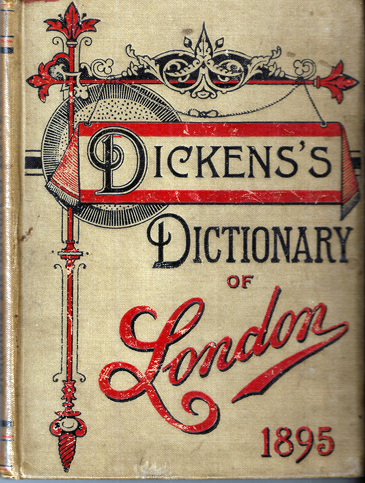
The extract below comes from pages 204 – 205 of an original edition of Dickens’s Dictionary of London 1895.
“Railways.—It would be difficult to attempt by any mere verbal explanation to describe the “iron roads” of the metropolis, and all efforts in that direction would be futile but for one or two maps (see MAPS) specially devoted to the elucidation of the labyrinth of stations, junctions, tunnels, viaducts, embankments, and cuttings, running in such quick succession as to make one marvel at the amount of ingenuity, skill, labour, and capital which must have been expended to obtain such results.
Recent years have seen considerable development, and especially in what is commonly called the “Underground” Railway, a term which originated with the construction (entirely in tunnels beneath the Marylebone and Euston rds) of the line between Farringdon-st and Bishop’s-rd, the first of its kind in the world; but a term, however, now falling rapidly into disuse owing to the numerous suburban branches which have since been constructed.
The lines are owned by two companies—viz., the District Ry. and the Metropolitan Ry.; and the most recent development of these systems has been the completion of what is known as the “Inner Circle”—i.e., the coupling-up of the line in the east end of London between Mansion House and Aldgate, by which means a circular system of trains is now running continuously throughout the day in both directions, connecting all the termini of the great railways, and enabling anyone to pass direct to or from the “Underground” systems entirely under cover with one exception—viz., between Fenchurch-st Stn. and Mark-lane, about a three minutes’ walking distance.
These particular systems are, however, of such vast importance to Londoners—as is evidenced by the enormous number of passengers carried by them annually—that a short description of them will be useful. Starting, therefore, say, from the Mansion House Stn. District Ry.), we pass westward to Blackfriars, thence under the Thames-embankment to Temple (for the theatres and Law Courts), Charing + (forSth.-Eastern Ry. and the theatres), Westminster (for the Houses of Parliament and Government offices), thence under Parliament-sq, skirting Westminster Abbey, to St. James’s-pk, Victoria (for the London, Chatham, and Dover, London, Brighton, and South Coast, and Crystal Palace Rys.), Sloane-sq, South Kensington (a subway connects this station with the Natural History and South Kensington Museums, the Exhibition Buildings, and the Albert Hall), Glo’ster-rd (several important branches diverge at this station—see below), thence to High-st (Kensington), Notting Hill Gate, Bayswater, Praed-st, Paddington (for Great Western Ry.), Edgware-rd (a junction for other branches), Baker-st (another junction), Portland-rd, Gower-st (for London and North-Western Ry.), King’s + (for Great Northern and Midland Rys.), Farringdon-st, Aldersgate-st, Moorgate-st, Bishopsgate (for Great Eastern Ry.), Aldgate, Mark-la (for the Tower and Fenchurch-st Ry. terminus), Monument (for London-br Rys.), to Cannon-st (for South-Eastern Ry.), and thence back to the Mansion House. This is called the “Inner Circle.”
What is known as the “Middle Circle” commences at Mansion House, and embraces the same stations as given above for the “Inner Circle” up to Glo’ster-rd, where the line diverges southward and passes through Earl’s Ct. (an important junction), to Addison-rd (another important junction), Uxbridge-rd (for Shepard’s Bush), thence to Latimer-rd, Notting Hill, and Ladbroke-grove, Westbourne Pk. (for Great Western line), Royal Oak, and Bishop’s rd (for Great Western terminus), to Edgware-rd, and thence over the “Inner Circle,” through Aldgate, back to Mansion House.
The “Outer Circle” takes the same route as the “Middle Circle” from the City as far as Uxbridge-rd, whence its direction is through Wormwood Scrubs to Willesden Junction (for London and North Western Ry.), KensalGn., Brondesbury, Finchley-rd, Hampstead Heath, Kentish Tn., Camden Tn., Islington and Highbury, Dalston Junction, and thence to Broad-st.
At Earl’s Ct. the line diverges in two other directions, one through West Brompton and Walham Gn. To Wimbledon, the other through West Kensington and Hammersmith, and thence through Shaftsbury rd and Turnham Gn., where it again diverges in two directions, one going south-westerly through Gunnersbury and Kew Gardens to Richmond, the other north-westerly through Acton Gn. to Mill Hill-pk, where it again diverges into two lines, one going through Ealing, and forming a junction there with the Great Western line to Southall, West Drayton, Slough, and Windsor, and the other to South Ealing, Boston-rd, Osterley and Spring Grove, to Hounslow (Town and Barracks Stns.).
Latimer-rd on the “Middle Circle” is the junction for a line which after passing through Shephard’s Bush to Hammersmith, connects near the latter place with the line to Richmond above described.
Baker-st on the “Inner Circle” is the junction for St. John’s Wood, Swiss Cottage, Finchley-rd, West Hampstead, Kilburn, Brondesbury, Kingsbury, Neasden, Harrow, Pinner, Northwood, Rickmansworth, Chorley-wd, Chalfont-rd, and Chesham.
The foregoing exhausts the whole of the line of the “Underground” system with one important exception, only recently opened, viz., on the “Inner Circle” line between Bishopsgate and Mark-la. Here two lines leave the “Inner Circle” and connect with one another at Aldgate East, from which point they pass through St. Mary’s to Whitechapel—Mile End.
At St. Mary’s the line diverges to Shadwell and Wapping, and passes thence through the Thames Tunnel to Rotherhithe, Deptford-rd, and New +, where it connects with the South Easter and London, Brighton, and South Coast Railway systems.
The latest development of London railways is the City and South London Railway, the motive power of which is electricity. The line runs, at present, from King William-st to Stockwell, but the Company has powers to extend to Clapham. The stations are at King William-st; High-st, Boro’, corner of Marshalsea-rd; Elephant and Castle; Kennington, corner of New-st and Kennington-park-rd; Kennington Oval; and Stockwell, Clapham-rd, corner of Binfield-rd.”
Aren’t you glad we now have the London Underground map to rely upon? I’d be interested to know whether all of the stations mentioned above are still operational. Perhaps I’ll have to take a trip to London to find out? Are you a Londoner? How many of the above stations did you recognise? Put your responses in the comments below!
~ T.G. Campbell, May 2026
Comments
2 responses to “BOW STREET SOCIETY’S LONDON: RAILWAYS, May 2026”
You’re right that it’s easier with the map!
I used to work near Barbican station which I think was formerly Aldersgate. Also, at least part of the line that’s called the Outer Circle was known as the North London line when I lived in London, though it may have been brought back into the Underground network in recent years with al! the changes that have happened.
(I just remember Finchley Road station not being part of the actual UndergrounD – hope my memory hasn’t failed me!)
I can picture the original readers of the book scratching their heads as they try to picture the network of lines in their mind’s eye! You’re right that a lot of changes have been made to the system over the years. I thought it was amusing that the author thought the term “Underground” was rapidly going out of fashion and, yet, here we are over a hundred years later still using it!